
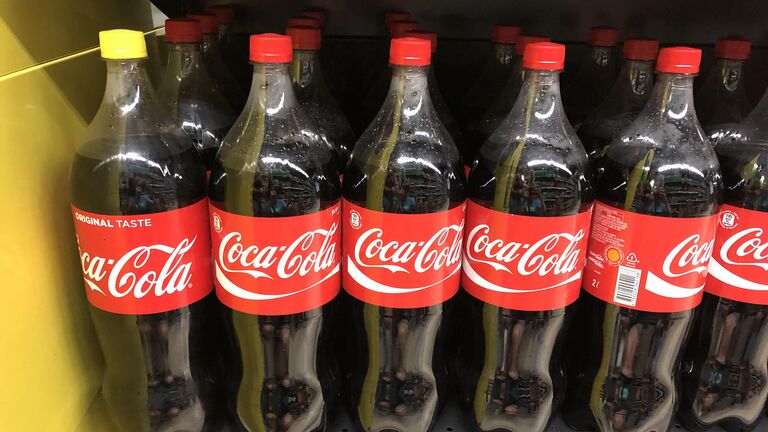
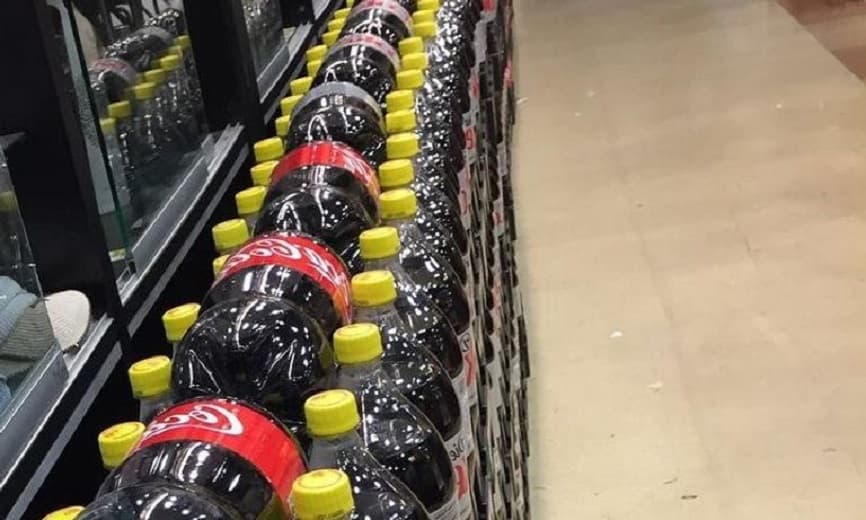
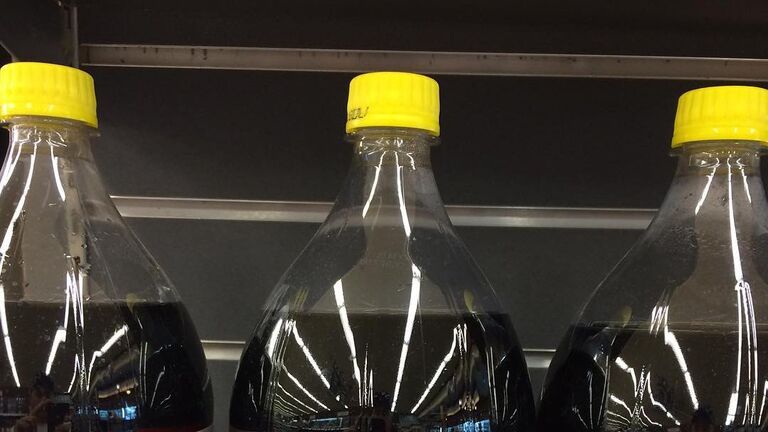
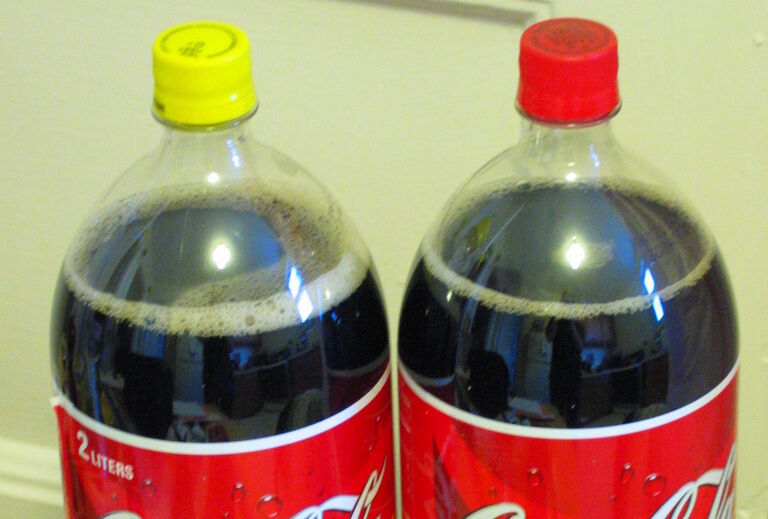
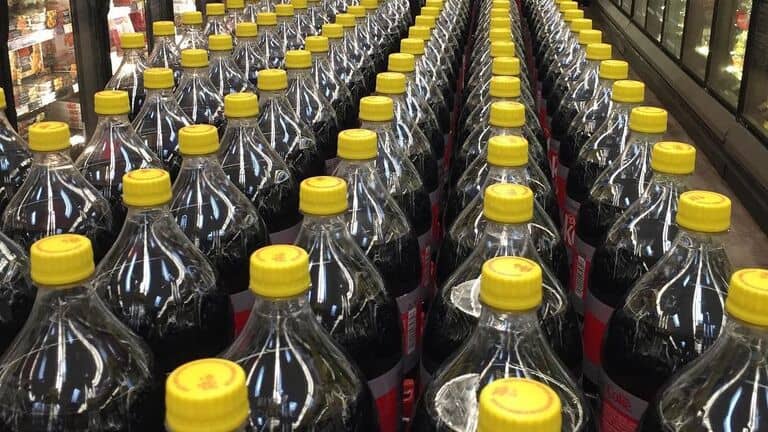
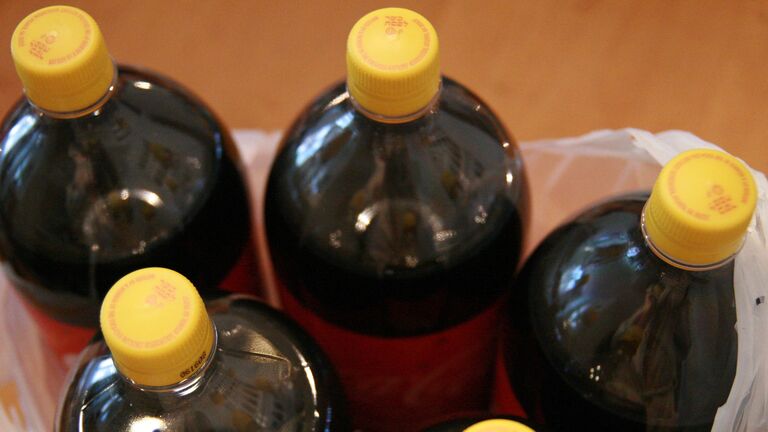
Coca-famous Cola’s red and white color combination is easily recognized by almost everyone. You know that no matter where you are on the planet, the red and white will bring you a carbonated soft drink. However, when you go home, you might notice some Coke bottles that seem a little different in your local supermarket. It’s the yellow caps we’re talking about. You are correct. They hadn’t been there before. However, they are not an error, and once you understand what they are for, you will see that they make perfect sense. Continue reading to learn more about Coke’s yellow caps.
Yellow-Capped Coca-Cola Bottle: It’s Not Just A Color
Other Colored Caps
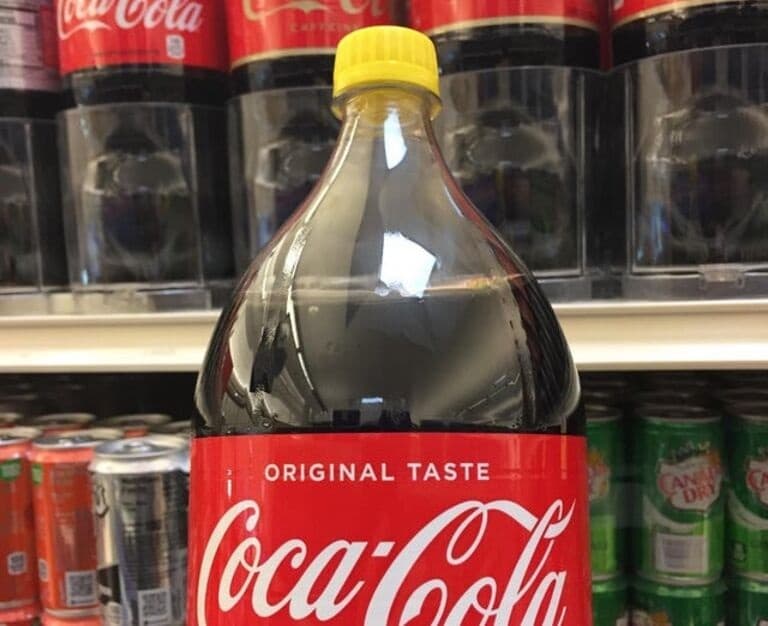
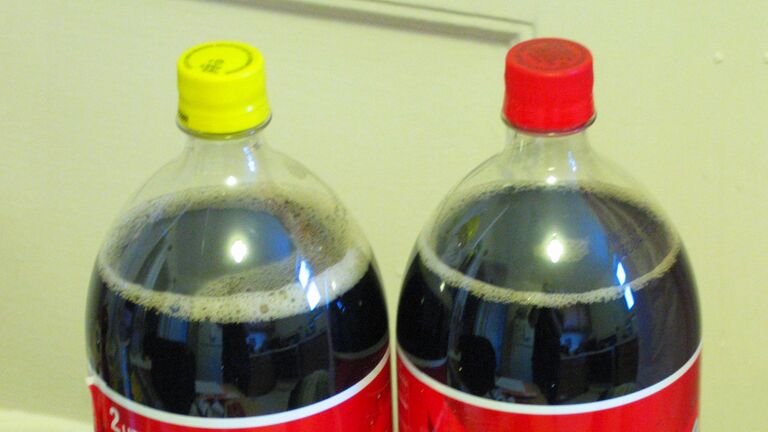
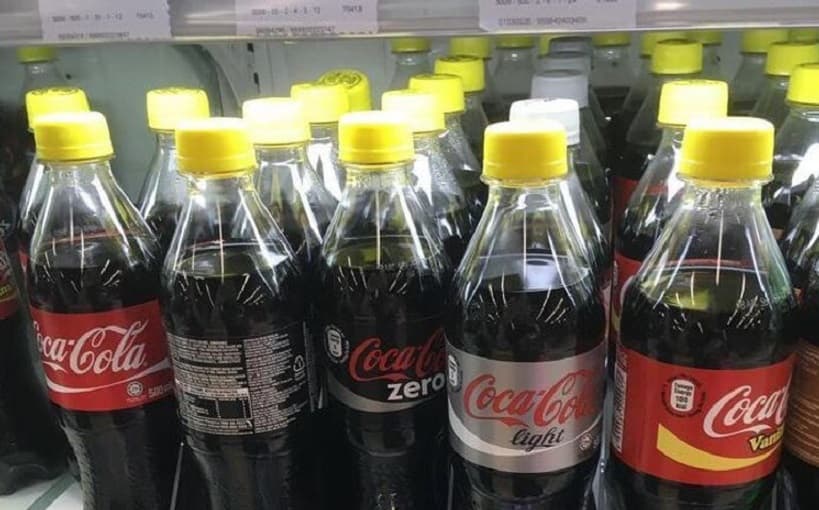
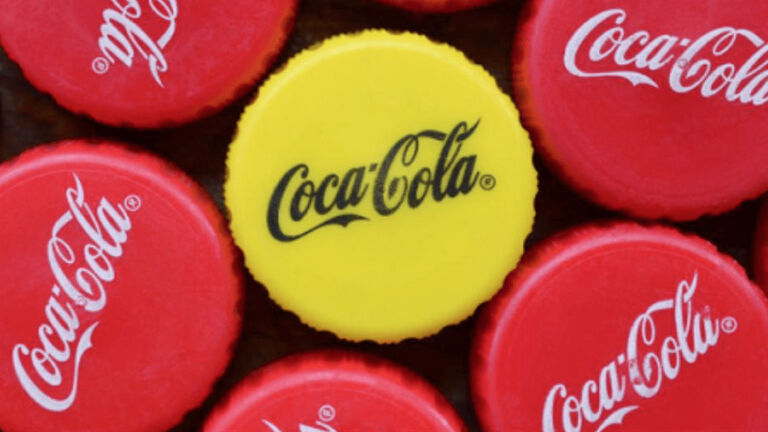
You probably think that Coke bottles already have a variety of colored caps. Perhaps you’re curious as to what distinguishes the yellow ones. The flavor of the drink is usually indicated by the caps. A beige cap on a Coke bottle, for example, indicates that the drink inside is vanilla-flavored. The brilliant yellow crowns, on the other hand, are an exception. The soft drink’s color has nothing to do with its flavor.
Other Colored Caps
Not Available Year-Round
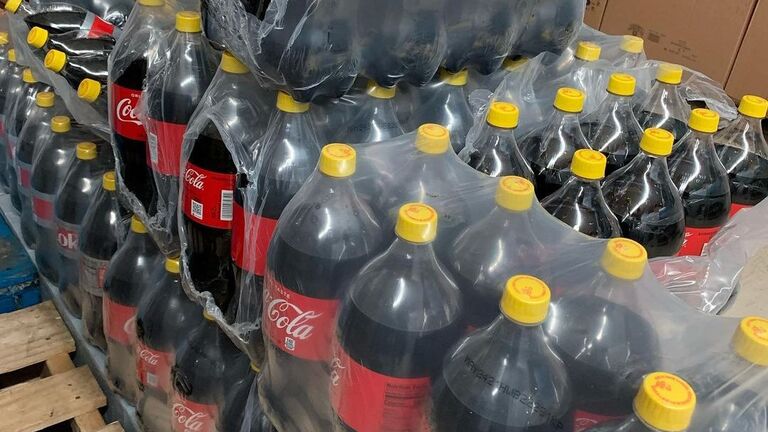
Apart from that, you won’t be able to see these bottles for the entire year. They only exist for a limited amount of time. During the spring, supermarkets begin to stock yellow caps. Because they are only available for a limited time, they are somewhat unique. Keep your eyes peeled for more information. Maybe you’ll see them in real life! We’re sure you’re thinking to yourself, “If the yellow caps don’t indicate flavor, then what are they for?”
Not Available Year-Round
Everything Else Is The Same
If you’re asking if there are any additional things to be aware of, we’re simply referring to the cap. From the red and white on the label to the iconic emblem, everything else is the same. Except for the yellow cap, it’s essentially an ordinary Coke bottle. Now that that’s evident, the next issue is probably why Coke chose to use yellow caps in the first place.
Everything Else Is The Same
The Iconic Look
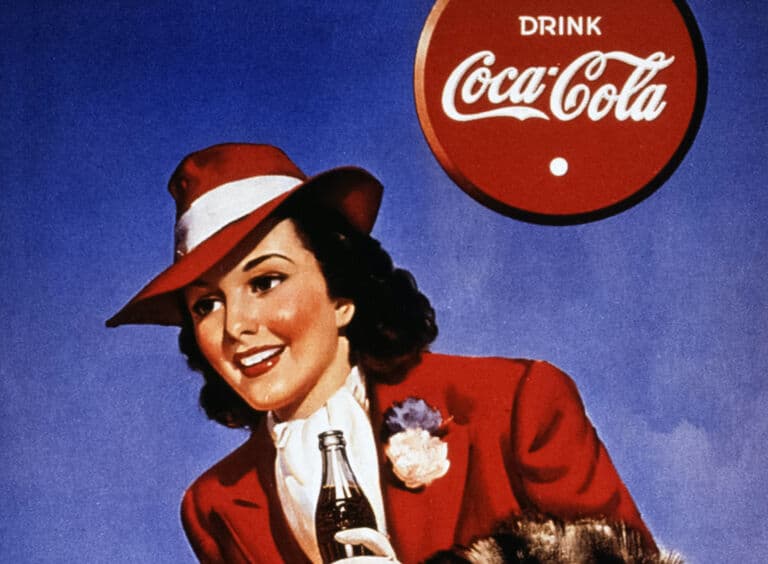
That made us think. What was the origin of Coca-Cola’s famous look? To address that question, let us go back a century to 1886 when John S. Pemberton combined the first batch of Coke ingredients. Millions of people around the world know and adore the drink today, but it was only a novel drink when Pemberton created it in 1886. It didn’t have a name yet.
The Iconic Look
“Coca-Cola”
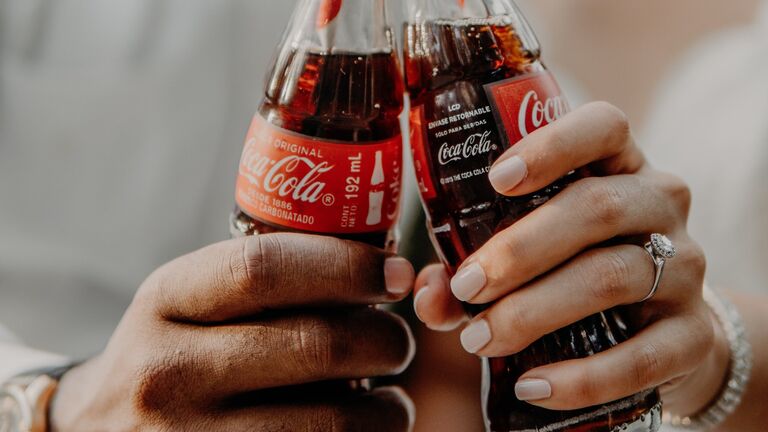
It was merely a fizzy, sugary concoction without a name at the time. This quickly changed when Pemberton’s financial counselor began dispensing pearls of wisdom. Frank M. Robinson is known as the inventor of the Coca-Cola beverage. That’s striking gold right there! But where did he get the name from? What was the source of inspiration for it? It probably never occurred to him that it would become a household name around the world.
“Coca-Cola”
The Beloved Logo
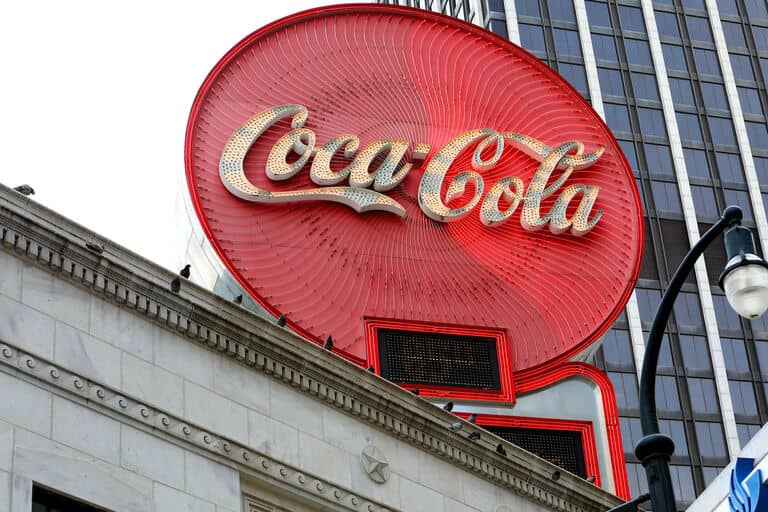
According to Coke’s website, Robinson explained, “The two Cs would look well in advertising.” Well, he wasn’t entirely wrong. After naming the beverage, he created the famous Coca-Cola logo, which was registered as a trademark in 1893. Although there have been a few small changes over the years, the design had largely remained the same when Robinson first drew it on paper. That’s more than a century’s worth of history!
The Beloved Logo
Still Around Over A Century Later
We’re not sure how Pemberton or Robinson would have reacted if they’d been told their work will be around for another 100 years. If it were up to us, we’d be astonished, if not outright shocked. Only a few people are capable of achieving such feats. But what about the classic red and white combination? When was Coca-Cola the first to use it? It happened when the company was still in its infancy, to be sure.
Still Around Over A Century Later
Wall Painting Ads
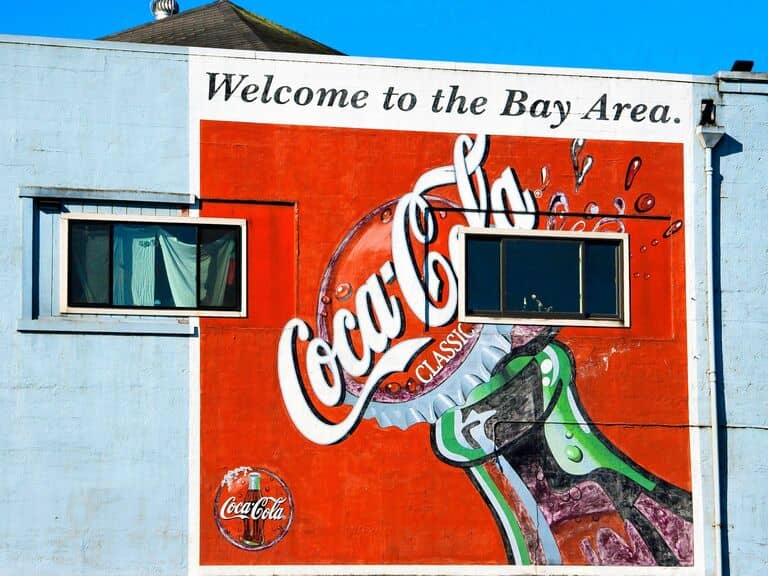
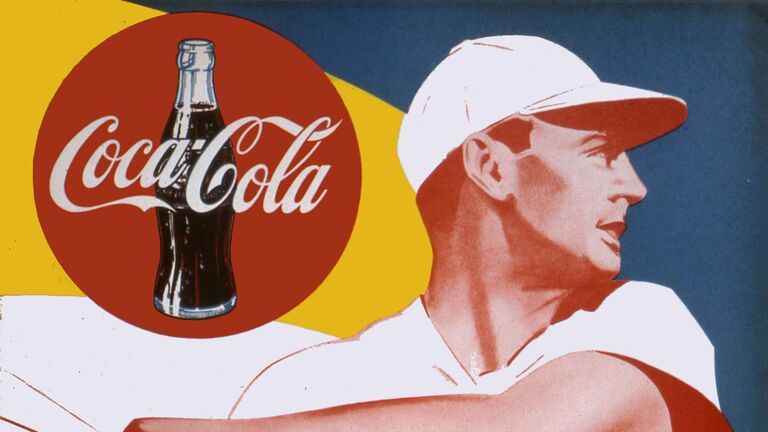
In the 1890s, Coca-Cola used wall paintings to promote the beverage. Even back then, it appears that the young corporation had a good understanding of its branding. The murals were painted on a red background with white text. Does this ring a bell? You might believe that this was the tipping point, but it wasn’t. And you’d be shocked to learn how Coca-hues Cola’s of red and white came to be.
Wall Painting Ads
For Taxes
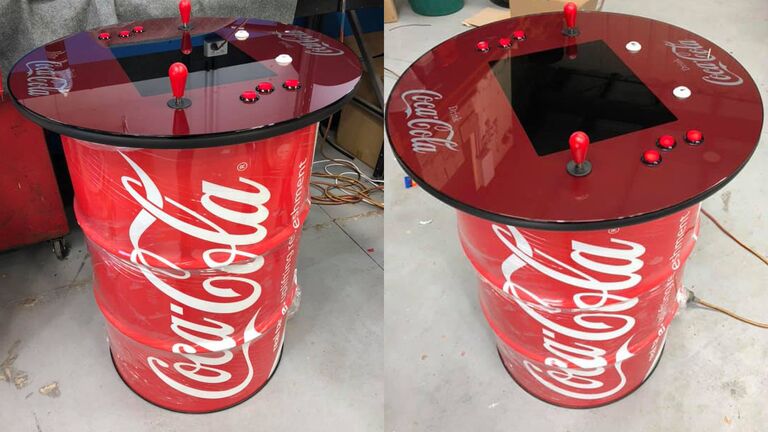
According to a company spokesperson in a 2018 interview with Business Insider, “From the mid-1890s, we began painting our barrels red so that tax agents could distinguish them from alcohol during transport.” Since then, the hues have remained. When you think about it, Coca-Cola’s use of the color red isn’t particularly compelling. It’s all a bit of a fluke. So, which red does the beverage powerhouse prefer?
For Taxes
Not One Shade Of Red
The red we see on Coca-Cola products is actually a blend of three different shades. Officially, the final result has not been recorded in design guides. If you want to paint your room “Coke red,” you’ll have to think outside the box. But, perhaps, this is why the color isn’t in design books—so that no one can copy it and use it to paint their room.

Not One Shade Of Red
A Color That Pops
It’s easy to see why the yellow caps are so prominent. They are in opposition to a color scheme that has been popular for over a century. The sunny shade really pops with the scarlet label. The caps, on the other hand, are unlikely to be as prominent in the South Pacific. This was especially true in 2014 when Coca-Cola appeared to feel the need to shake things up.
A Color That Pops
Different Colored Cans
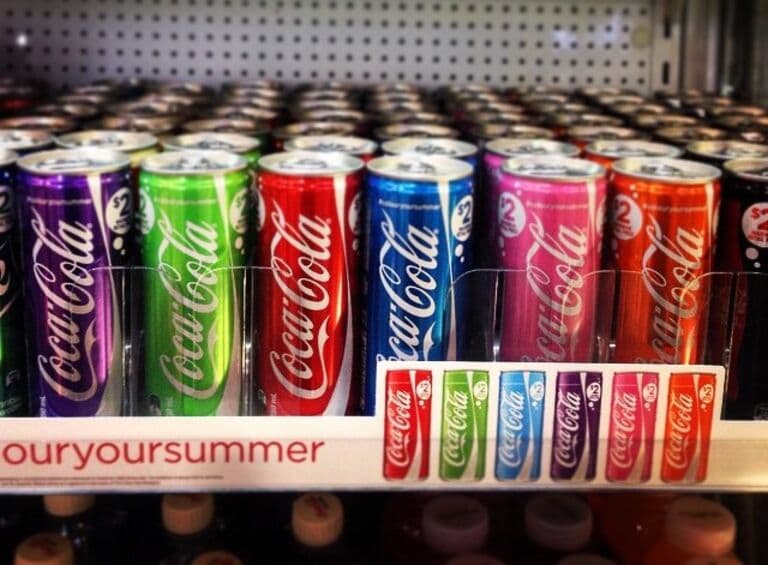
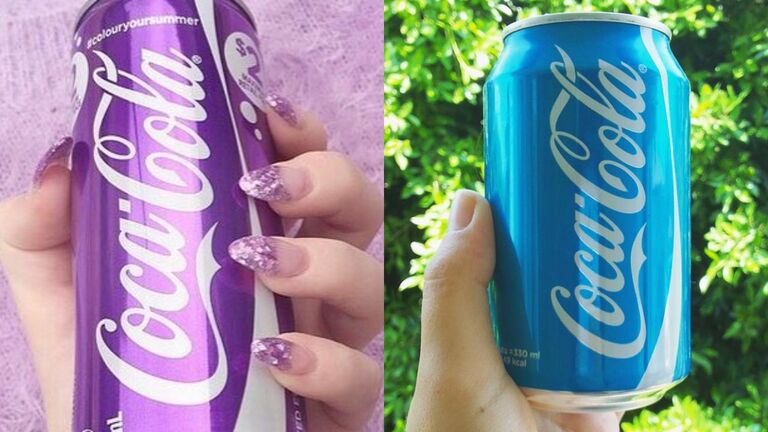
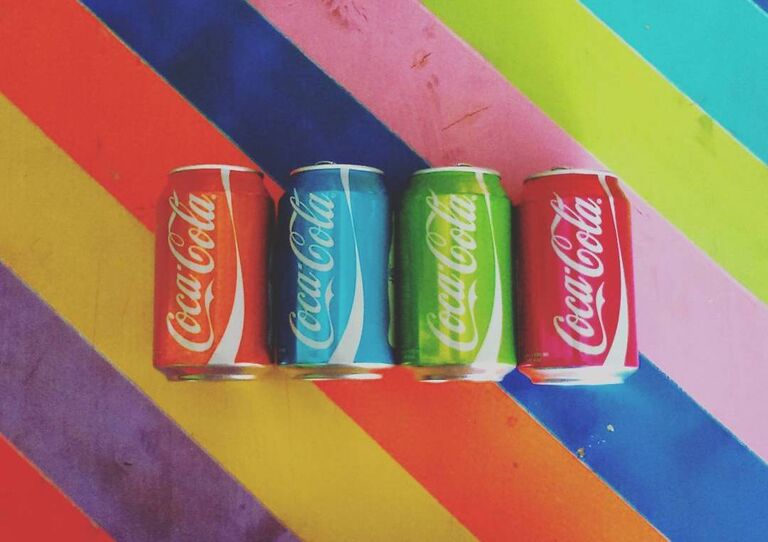
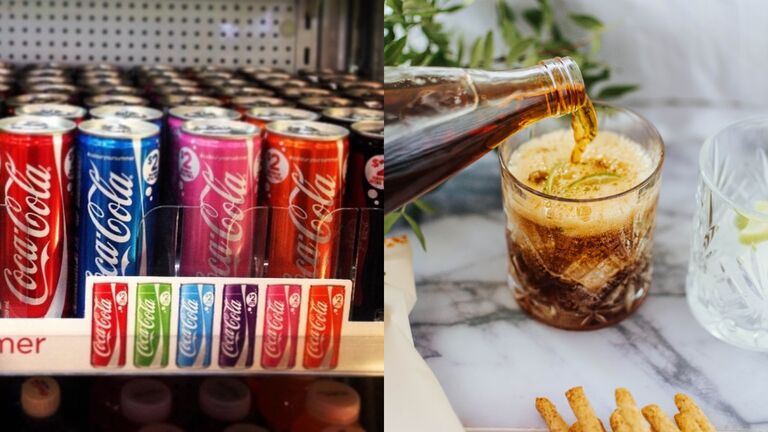
At the very least, the bright yellow would not clash with the cans released by Coca-South Cola’s Pacific branch in 2014. Coke cans in five different colors were available on the other side of the world for a short time: green, blue, purple, orange, and pink. As you can see, the yellow doesn’t stand out as much when compared to the other five colors. However, this raises the question of why the specific colors were chosen.
Different Colored Cans
Vibrancy
Angeline Lee, the campaign’s brand manager, said: “From a design perspective, we were really careful about retaining that vibrancy of Coke.” She added, “[The cans] really need to jump out on the shelf, so the boldness of the color was really important for us.” The drinks behemoth apparently wanted to attract the attention of people in the South Pacific. Coca-Cola appears to have accomplished this. The five colors are not the traditional red and white.
Vibrancy
Intriguing Colors
As you might expect, the cans definitely stood out. The red Coca-Cola was still available, and you could get it. However, don’t you think the other colors available are interesting as well? Wouldn’t you reach for one of those cans if you saw them in a store? Just to see what it’s like. Anyway, you probably have no idea, but the team in charge of overseeing the almost sacrilegious process of changing Coke’s packaging hit a major snag.
Intriguing Colors
Logistical Nightmare
Head of the packaging graphics department Gary Burke explained the particular logistical nightmare that they had. “The biggest challenge was to get the variation in the market, so one shop didn’t get all green cans and another shop got all orange cans. We wanted to try and mix them up,” he said. While it is true that having all five colors in one store is preferable, we believe that the fact that Coke isn’t in its usual color can pique our interest in the drink and prompt us to purchase it. But that’s just the two of us.
Logistical Nightmare
Easier Said Than Done
On paper, the concept was fantastic. In real life, however, ensuring that shops receive different colored Coca-Cola cans was difficult. Workers had to roll up their sleeves and work up a sweat. The entire process could not be completed by machines alone. It happens all the time. Sometimes you have an amazing idea that you think is simple, but when you put it into action, you realize it isn’t so simple after all.

Easier Said Than Done
Labor-Intensive Process
Manager Jacqui Rooney said, “We decided to manually re-stack a pallet [containing the cans].” She added, “We had three different pallets each with two different colors. We’d take one layer off each pallet and manually rebuild it.” They probably dreamed about cans for many nights after they were done. The campaign was most likely not completed in the United States due to the labor-intensive process. We’d like to try some purple-colored Coke, but that’s too bad.

Labor-Intensive Process
A Different Situation
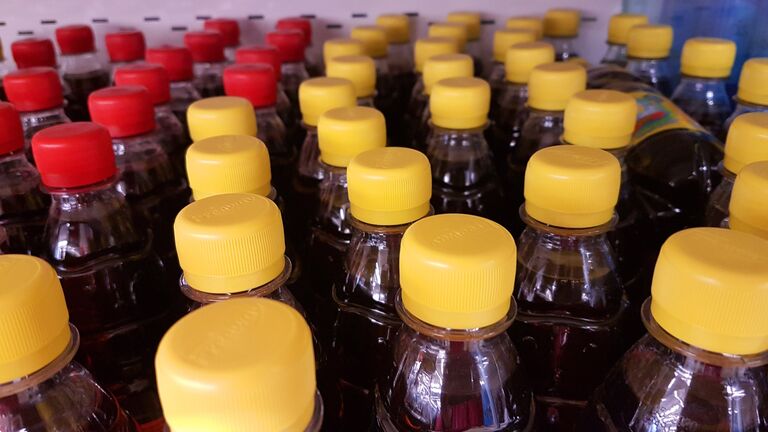
The situation with the yellow bottle cap is a little different. Like the colored cans, they’re limited. There is a slight difference in the ingredients of the drink if it comes in a bottle with a yellow cap compared to the formula used in regular Coca-Cola. The colored cap may not indicate a specific flavor, but the drink’s formula is unique. However, many people are unlikely to notice the difference.
A Different Situation
A Different Sweetener
The drink inside bottles with yellow caps does not contain high-fructose corn syrup, unlike regular Coca-Cola. Instead, those beverages contain sucrose, a sweetener derived from both cane sugar and beet sugar. On paper, that may appear to be a bit random, but there’s a reason why the drinks behemoth chose to replace only one component while keeping everything else the same. And the move is aimed at a specific demographic.

A Different Sweetener
A Jewish Holiday
The change was made to accommodate those who observe Passover. Corn syrup, along with a few other foods, is forbidden during the annual Jewish holiday. On the other hand, Sucrose isn’t forbidden, so Passover-observant people can still enjoy a Coke—just the kind with the yellow cap. The beverage behemoth appears to be serious about making Coke a year-round beverage.
A Jewish Holiday
Kosher
The special caps essentially say, “this drink is kosher during Passover.” In terms of products that meet Jewish food and beverage standards, the Hebrew term Kosher means “fit, proper, or correct.” To put it another way, it’s a stamp of approval. During Passover, anything that is not kosher is forbidden. The holiday is usually observed for about a week in the spring, and there are other customs that are observed.
Kosher
Confusing
However, things can become a little perplexing. Even if food and drink are otherwise kosher when it is not Passover, they may be prohibited during the holiday. And regular Coke falls into this category. During the annual holiday, the rules become even stricter. Passover is observed by Jews all over the world, so you can expect to see kosher food and beverages in many parts of the world this spring.

Confusing
No-no’s
So, when it comes to food and drink during Passover, what are the no-nos for Jews? For starters, anything that falls into the chametz category. The Hebrew term refers to foods that contain grain ingredients, such as oats, wheat, spelt, barley, and rye. All foods and beverages containing these ingredients are forbidden. The list, however, does not end here. There are a few more things you can’t eat during Passover.

No-no’s
No Chametz
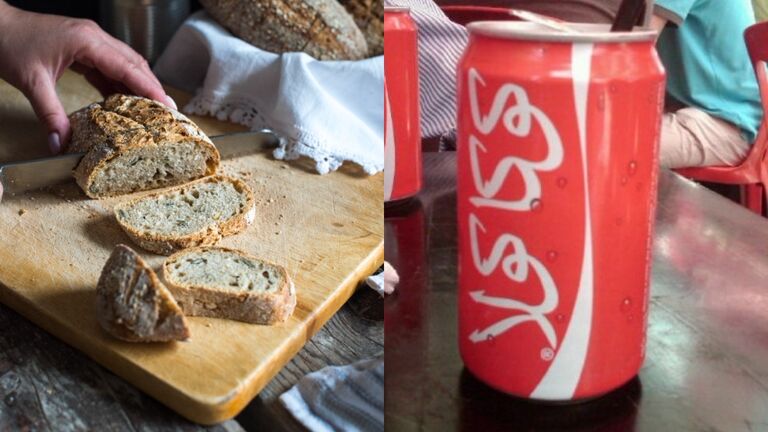
Any food that rises during the cooking process is also prohibited. If there is a loaf of bread in the house, for example, the occupants must remove all traces of it before Passover. That includes every last crumb. Those who strictly follow the Passover rules literally do not eat any chametz during the holiday. Coca-Cola must have been aware of this and decided to create a kosher version of the beverage.
No Chametz
Other Restrictions
Apart from chametz, kitniyot is also prohibited during Passover, though not all Jews are required to follow it. They are safe if someone does not have “Ashkenazi” (which means Eastern European) roots. However, this only accounts for about a quarter of the world’s Jews. This means that many people still refrain from eating kitniyot during Passover. But what is kitniyot, and does it have any significance for Coca-Cola?

Other Restrictions
No Legumes And Grains
Kitniyot forbids Jewish people from handling legumes and other grain varieties. Because corn is included in that category, Coca-Cola is not permitted during Passover unless the high-fructose corn syrup is replaced with sucrose. As you can see, a small change can have a significant impact. The drink can be enjoyed by Jews even during Passover because it is sweetened with sucrose. But did you know that Coca-Cola has been using sucrose for a long time?

No Legumes And Grains
Used To Be The Ingredient Of Choice
Coca-Cola has used sucrose before, as previously stated. It used to be the company’s preferred ingredient in the past. The sweetener, however, was replaced with low-cost high-fructose corn syrup. That may seem like a minor detail, but it may come in handy the next time you attend trivia night… Anyway, back to the yellow caps and Coca-Cola. So, how did Coca-Cola come up with the idea to use sucrose in Coke once more?

Used To Be The Ingredient Of Choice
A Rabbi’s Idea
Because of a rabbi’s recommendation, Coca-Cola decided to use sucrose for Passover. Tuvia Geffen, a synagogue leader in Atlanta, Georgia, came up with the concept in the 1930s. This means that the concept of Passover-friendly Coca-Cola has been around for decades. What prompted the rabbi to suggest this to the drinks company? We’re curious if he thought Coca-Cola would take up his suggestion.
A Rabbi’s Idea
Coca-Cola Gets Mentioned In Religious Edict
When Rabbi Geffen wrote an official religious edict or a teshuva, he mentioned Coca-Cola. “Because it has become an insurmountable problem to induce the great majority of Jews to refrain from partaking of this drink, I have tried earnestly to find a method of permitting its usage,” he noted. Basically, he wanted kitniyot to be observed. Coke, on the other hand, was holding them back. However, with a little help, the rabbi was able to find a way around this.
Coca-Cola Gets Mentioned In Religious Edict
“A Pragmatic Solution”
Rabbi Geffen added, “With the help of God, I have been able to uncover a pragmatic solution.” Serving Coca-Cola during Passover is no longer an issue for Jewish families, thanks to his solution. So, has a glass of Coke been raised in his honor? He essentially made it possible for Jews to continue to enjoy the fizzy drink during the holiday season. Coke that is Passover-friendly would not exist if it weren’t for him.
“A Pragmatic Solution”
Passover-Friendly Coke
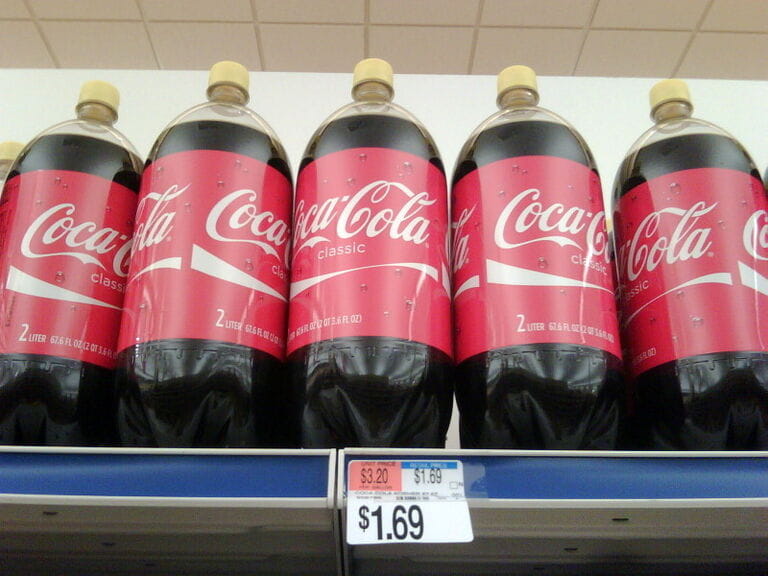
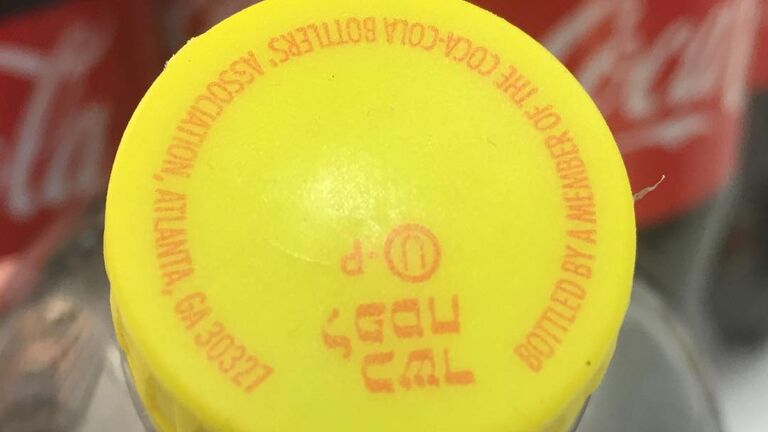
We all know that a yellow cap indicates a Passover-friendly Coke, but did you know there’s another sign to look for? If you look closely at the plastic tops, you’ll notice the letters “O-U-P,” which indicate that the product has received the Orthodox Union’s approval. As a result, the beverage has been certified kosher. That body is also in charge of inspecting other foods and beverages.
Passover-Friendly Coke
A Mystery
Isn’t it fascinating to learn about? Kosher standards are probably a mystery to those who aren’t Jewish. We also have no idea what these standards entail, but at the very least, we now know that we can drink Coke over the holidays. Coca-Cola can actually help you figure out which kind of Coke is appropriate to drink during Passover. This has been addressed by a company spokesperson.
A Mystery
Kosher Year-Round And For Passover
“The Coca-Cola Company offers products as kosher year-round (KYR) and kosher for Passover (KFP),” the spokesperson said. “In the United States, both Coca-Cola and Diet Coke are available as KYR and KFP in locations where the bottlers have decided to seek certification. Kosher for Passover products can be found in select markets during the Jewish holiday of Passover.” This means that if you’re Jewish, you can drink a Coke whenever you want.
Kosher Year-Round And For Passover
The Real Deal
It’s actually quite simple to tell if you’re getting the real deal. Coca-Cola explained: “Only finished products bearing the logos of one of the designated Rabbinical organizations we work with can be guaranteed to be kosher.” They added, “The production is supervised by these organizations through the entire end-to-end production process.” However, Coke isn’t the only beverage subjected to stringent Passover regulations. Other foods and beverages are subjected to the same tests.
The Real Deal
The Orthodox Union
The Orthodox Union has examined a wide range of foods and beverages. They also double-check what needs to be changed before the vacation. Because corn syrup was discovered in the ingredients of certain honey products in 2021, the organization required them to receive “special Passover certification.” Coca-Cola isn’t the only company that uses corn syrup in their products. Because it is a less expensive option, many other companies use the sweetener as well.

The Orthodox Union
Dairy Product
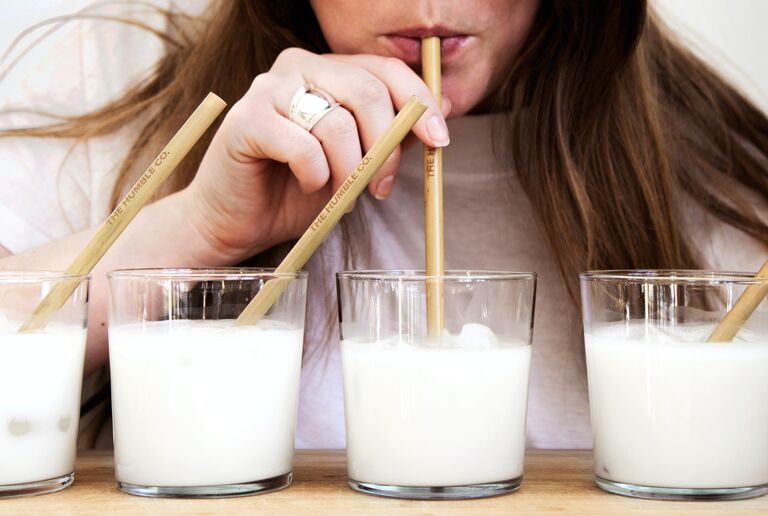
Milk was another product that was scrutinized. According to the Orthodox Union, some milk brands may contain added vitamins that are considered chametz. People should buy bottles that have “special Passover supervision,” according to the union. As you can see, the group still scrutinizes products that we use on a daily basis. However, this isn’t the end of the list of things they check.
Dairy Product
Frozen Fish
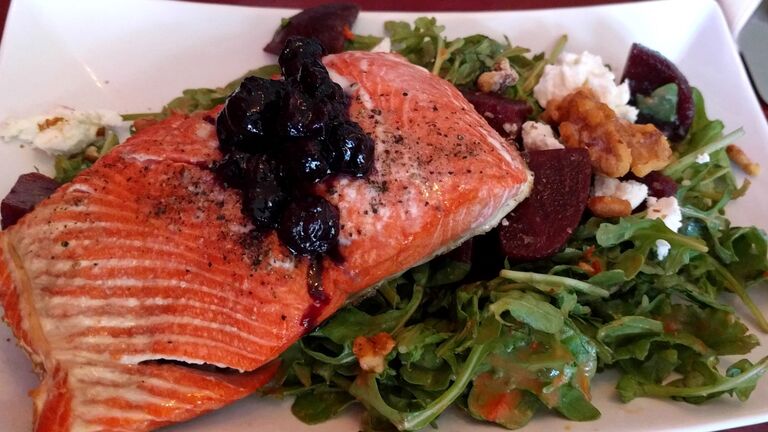
According to the website, all frozen fish was also okay to eat during Passover, but the fish had to be raw inside the freezer. Costco’s Keta Salmon Fillets, 365 Everyday Value’s Atlantic Salmon, Kirkland Signature’s Tilapia Loins, and Wellsley Farms’ Wild Sockeye Salmon were among the delicacies on the list. This is great news for Jews who enjoy eating fish. The Orthodox Union’s sampling of food and beverages is truly impressive.
Frozen Fish
Extremely Thorough
The union is extremely thorough. Even saying that is an understatement! Here is something you should remember. A product may be deemed kosher for Passover, but that doesn’t mean you cannot get your hands on it if you are not Jewish. Anyone can buy those products, including the yellow-capped Coke. Perhaps you are wondering if non-Jewish people actually choose this kind of Coca-Cola over the regular kind. As it turns out, there are folks like that.

Extremely Thorough
Old But Gold
In fact, some people buy those bottles because they want to try the old flavor of the brand. Apparently, some believe the yellow-cap Coke is superior to the Coke with high-fructose corn syrup. Are you interested? Do you want to have a taste? Next year, on April 16, 2022, the next Passover will take place. Take a note of the date on your calendar!
Old But Gold